

Application Areas and Technical Functions in the Food Sector
In the food industry, salt is not merely a flavoring agent; it is a fundamental input in terms of product safety, process stability, and quality continuity. The source, purity level, and physical properties of the salt used in production processes directly impact the shelf life, texture, and sensory characteristics of the final product.
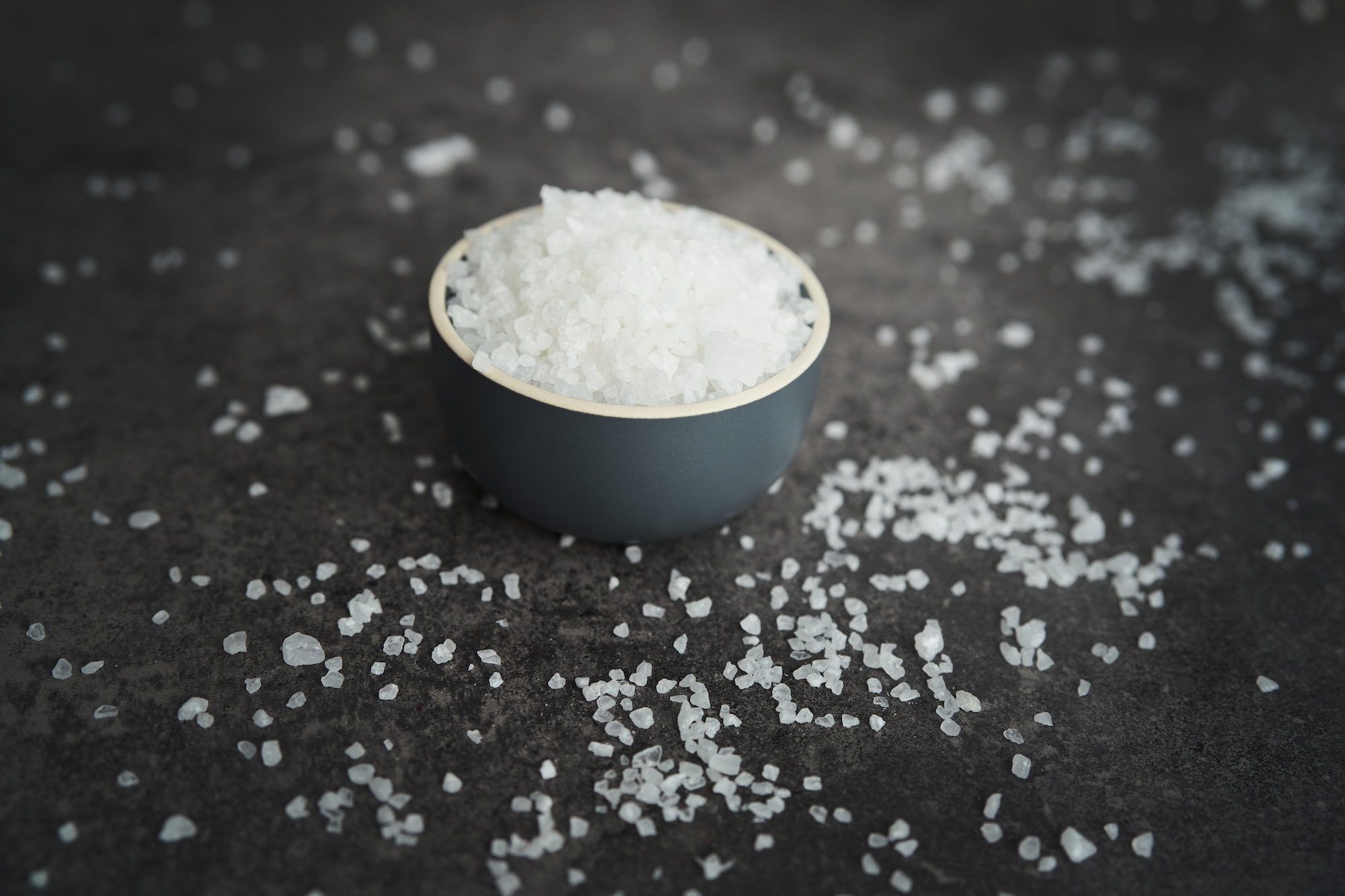
The natural crystal rock salt obtained by EFTA Salt from the Kırıkkale–Delice mining sites is prepared using physical methods without undergoing any chemical refining process. This approach ensures the preservation of the salt’s natural mineral structure and provides a predictable, stable raw material for the food industry.
Sesame Peeling and Processing
Salt solutions used in sesame peeling lines assist in achieving controlled and homogeneous hull separation. The solubility balance and mineral composition of natural crystal rock salt support more stable process parameters. Trace elements naturally present within the salt accompany the process as a part of the raw material’s natural structure, without any additive or enrichment intent.
Brine and Fermentation Applications
The quality of brine solutions in fermented products such as olives, cheese, and pickles is of critical importance for a healthy fermentation process. High-purity crystal granular salts:
- Contribute to balancing osmotic pressure,
- Help limit the growth of unwanted microorganisms,
- Support a more controlled fermentation process.
These features contribute to preserving the product’s characteristic flavor profile and optimizing shelf life through natural means. Natural crystal salts containing selenium are used as auxiliary components in food processing such as sesame peeling. In this application, the salt facilitates hull separation and ensures a more controlled process without containing chemical additives. Selenium and other trace minerals are present as a result of the salt’s natural structure; they are not added to the product for functional supplementation purposes.
Tomato Paste and Canned Food Production
The purity level of the salt used in tomato processing, paste, and canning lines is vital for preserving product color and preventing unwanted reactions during the process. Unrefined crystal rock salt can be used as a stable auxiliary component in the production line, contributing to product standardization.
Dried Foods and Nuts Sector
While salt supports moisture balance in the production of dried vegetables and fruits, it stands out in nut applications with its granular structure that ensures balanced adhesion to the product surface. Appropriate particle size distribution provides advantages in both flavor homogeneity and visual quality.
Table Salt and Industrial Kitchen Use
Table salt with a preserved natural mineral balance and various granulation options offers the advantage of a “pure ingredient” for industrial kitchens and food manufacturers. This additive-free structure provides an ideal solution for producers adopting a “Clean Label” approach.
Operational and Technical Advantages
Using salt that has not undergone chemical processing and has been prepared through physical methods such as optical sorting in industrial food production lines contributes to:
- Reducing the risk of corrosion in equipment,
- Preventing unexpected chemical interactions in formulations,
- Achieving more predictable quality results in production processes.
EFTA Salt’s sustainable raw material supply, standardized production processes, and quality-oriented approach aim to offer food producers not just a salt product, but a long-term and reliable solution partnership.