

Salt-Based Separation Technologies in Plastic Recycling Processes
In the plastic recycling industry, salt is not merely an auxiliary chemical; it is a technical input that directly affects separation accuracy, process efficiency, and the quality of the resulting secondary raw material. Particularly in separation systems based on density differences, the purity, solubility capacity, and mineral stability of the salt used are of critical importance for process sustainability.
EFTA Salt purifies natural rock salt through physical methods such as crushing, washing, screening, and optical sorting—without chemical refining—providing it at the density and purity standards required by plastic recycling facilities. This contributes to achieving predictable and reproducible process results in separation lines.
Technical Functions and Application Areas
Density Separation (Sink–Float Systems)
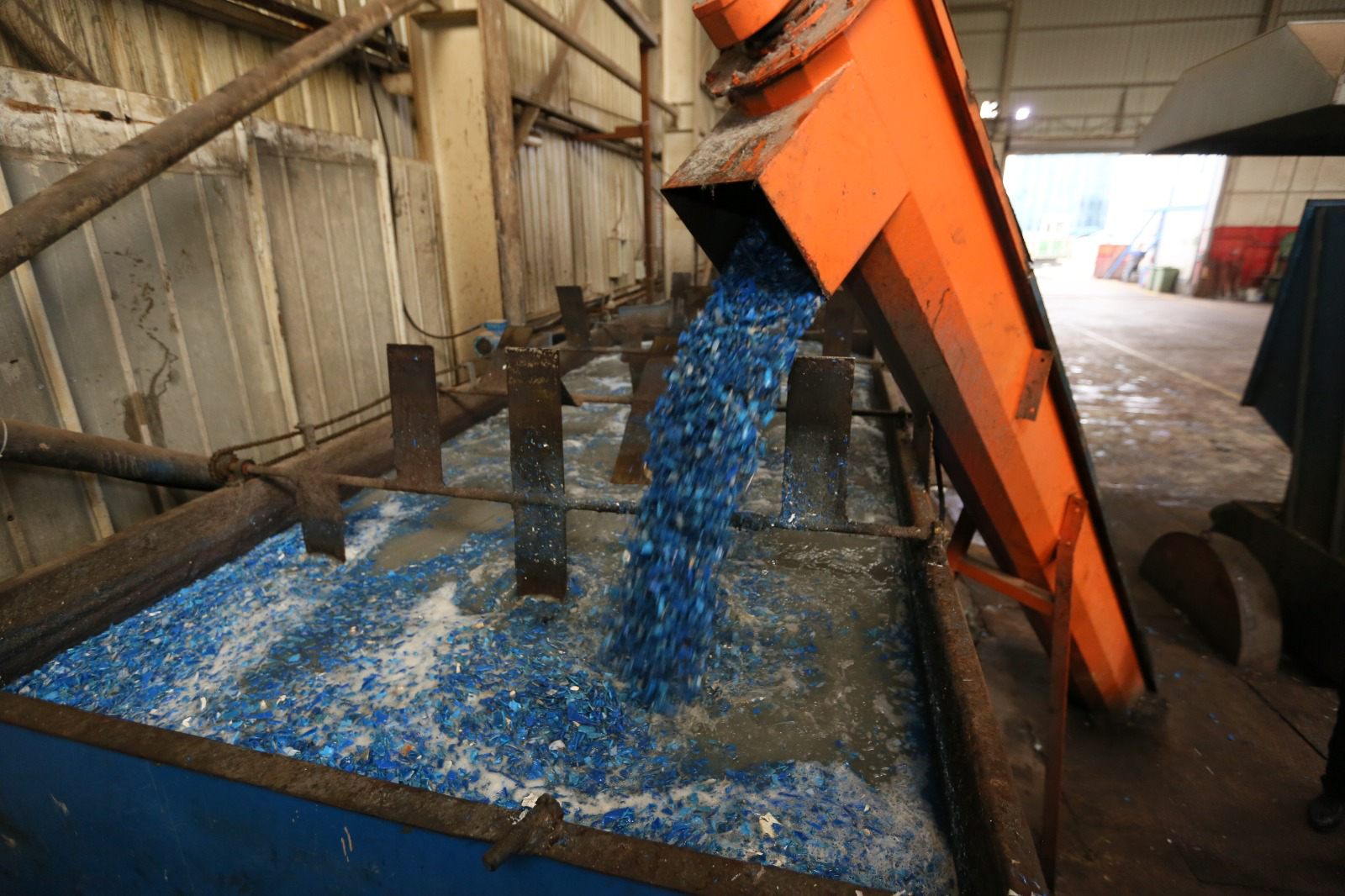
In the separation of different polymer types such as PE, PP, PET, and PVC based on their density differences in water, the preparation of controlled salt solutions (brine) is a fundamental requirement. High-purity crystal salt supports:
- Precise adjustment of the targeted density in separation tanks,
- Clearer and more stable separation of different plastic types,
- Reduction of misclassification and cross-contamination risks.
Process Stability and Control
The high solubility rate and homogeneous mineral structure of the salt help maintain constant brine density throughout the process. This situation:
- Reduces the need for continuous density adjustment,
- Minimizes operator intervention,
- Contributes to lowering scrap rates and energy losses.
Washing and Purification Stages
In the washing lines for plastic flakes, salt is used as an auxiliary component that supports the removal of organic residues, oils, and fine contaminants from the surface. Solutions prepared at the appropriate concentration:
- Improve flake surface cleanliness,
- Enhance raw material quality prior to drying and extrusion,
- Positively contribute to the visual and mechanical properties of the final granulated product.
Operational and Technical Advantages
Precision Sorting Performance
The use of salt that has undergone optical sorting and physical purification—free from foreign particles—supports the stable operation of sensor-based separation systems and density tanks. This ensures that separation sensitivity is maintained and system performance does not degrade over time.
Low Corrosion and Wear Risk
The natural structure, which has not undergone chemical refining, helps reduce unwanted abrasive effects on metal equipment, pumps, and pipelines. This contributes to lower maintenance costs and an extended equipment lifespan.
Uninterrupted and Planned Raw Material Supply
High-tonnage demands are delivered in a planned and timely manner to support operational continuity. This logistical structure allows for:
- Preventing production downtime caused by inventory shortages,
- Simplifying in-plant raw material management,
- Supporting continuous production goals.